
News
News, updates, progresses, media coverage and achievements from the BDSC
Publication Year
01 06, 2025
Prof. Alessandro Sepe Honored with the Chinese Government Friendship Award
Prof. Alessandro Sepe, Head of the Scientific Computing Program at the Shanghai Synchrotron Radiation Facility (SSRF), Shanghai Advanced Research Institute (SARI), Chinese Academy of Sciences was awarded the Chinese Government Friendship Award at the Great Hall of the People in Beijing on September. 30th 2024.
Prof. Alessandro Sepe, Head of the Scientific Computing Program at the Shanghai Synchrotron Radiation Facility (SSRF), Shanghai Advanced Research Institute (SARI), Chinese Academy of Sciences was awarded the Chinese Government Friendship Award at the Great Hall of the People in Beijing on September. 30th 2024.
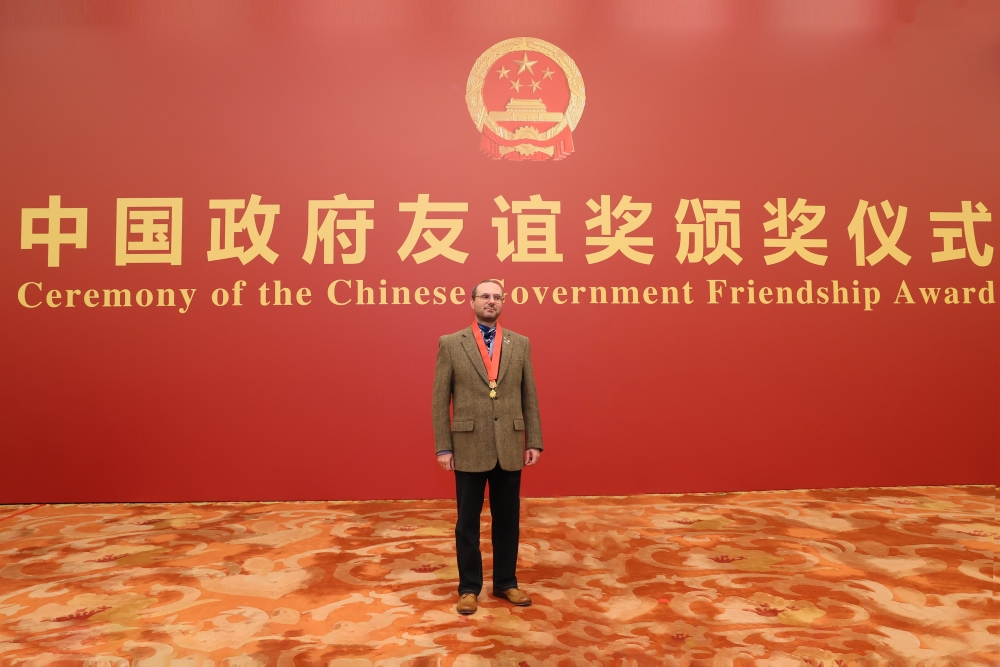
Prof. Sepe's main research direction is synchrotron Big Data science. So far, he has published nearly 40 papers in internationally renowned journals and had prominence and recognition within the international scientific community.
He has led his team carrying out a series of innovative research and development works culminating in the architecting, design and deployment of the BDSC at the SSRF, while making a number of core technological breakthroughs in the design and development of scientific computing infrastructures, and in the research and development of automatic data processing pipelines.
Furthermore, Prof. Sepe has actively used his overseas research network to promote SSRF's foreign exchanges and cooperation.
Established in 1991, the Friendship Award is the highest honor to commend foreign experts who have made outstanding contributions to China's modernization drive. 100 winners are awarded the 2024 Chinese Government Friendship Award. Acting as experts in the field of international communication, they have made great contributions to making the voices of China better heard in the world.
07 17, 2024
Prof. Alessandro Sepe Elected Fellow of the Royal Society of Chemistry
Prof. Alessandro Sepe, Head of the Scientific Computing Program at the Shanghai Synchrotron Radiation Facility (SSRF), Shanghai Advanced Research Institute (SARI), Chinese Academy of Sciences, has been elected Fellow of the Royal Society of Chemistry.
Prof. Alessandro Sepe, Head of the Scientific Computing Program at the Shanghai Synchrotron Radiation Facility (SSRF), Shanghai Advanced Research Institute (SARI), Chinese Academy of Sciences, has been elected Fellow of the Royal Society of Chemistry in recognition of the eminent seminal work in advancing excellence in the internationally impacting multidisciplinary and multimodal science at the large scientific facilities through the visionary research, development and implementation of state-of-the-art scientific computing, and resulting in the establishment at the SSRF of the first Superfacility in China, and one of the first worldwide.
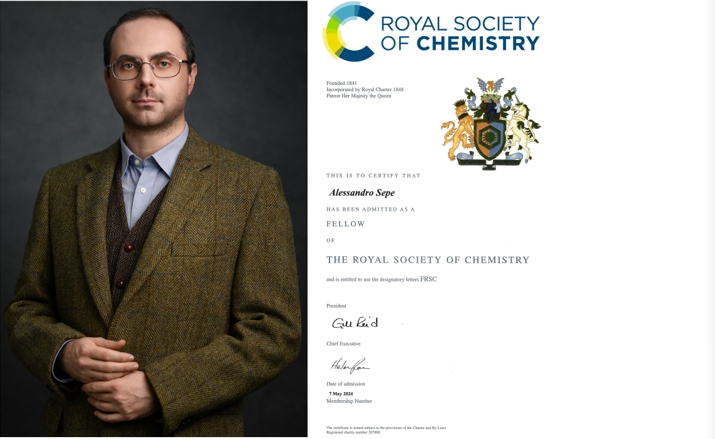
The Royal Society of Chemistry is the oldest and one of most prestigious society in its field in the world, and being elected a Fellow of the Royal Society of Chemistry represents one of the most significant academic accolades worldwide.
Prof. Sepe joined the SSRF in 2018, where he helm and lead the Scientific Computing Program, which resulted in several outstanding milestones, including, architecting, deploying and establishing the Big Data Science Center (BDSC), designing, developing and deploying the Artificial Intelligence – SSRF – Superfacility Platform (AI-SSRF-SP), architecting and deploying the Scientific Cloud / Edge Hybrid Infrastructure, as well as designing, developing and deploying scientific computing pipelines for the automation of multidisciplinary experiments at the SSRF beamlines.
Prof. Sepe accomplishments resulted in national and international accolades. He was awarded the I-LAMP Medal and Award by the Catholic University of the Sacred Heart, Milano, Italy for his outstanding academic career in Big Data Science applied to multidisciplinary science at large scientific facilities in 2019 and the Magnolia Medal and Award by the Chinese Government for his outstanding contributions in supporting the development of the major national science and technology infrastructures in 2022.
01 11, 2023
Congratulations to Prof. Alessandro Sepe on Winning the 2022 Shanghai Magnolia Silver Award
On December 18, 2022, the Shanghai "Magnolia Silver Award" ceremony was held in Shanghai. Prof. Alessandro Sepe, Chief Scientist of the Big Data Science Center (BDSC) at the Shanghai Synchrotron Radiation Facility (SSRF), was awarded this award for his outstanding contributions supporting the construction of major national
On December 18, 2022, the Shanghai "Magnolia Silver Award" ceremony was held in Shanghai. Prof. Alessandro Sepe, Chief Scientist of the Big Data Science Center (BDSC) at the Shanghai Synchrotron Radiation Facility (SSRF), was awarded this award for his outstanding contributions supporting the construction of major national science and technology infrastructures, promoting Shanghai's urban economy and social development, and promoting foreign exchanges and cooperation. |
|
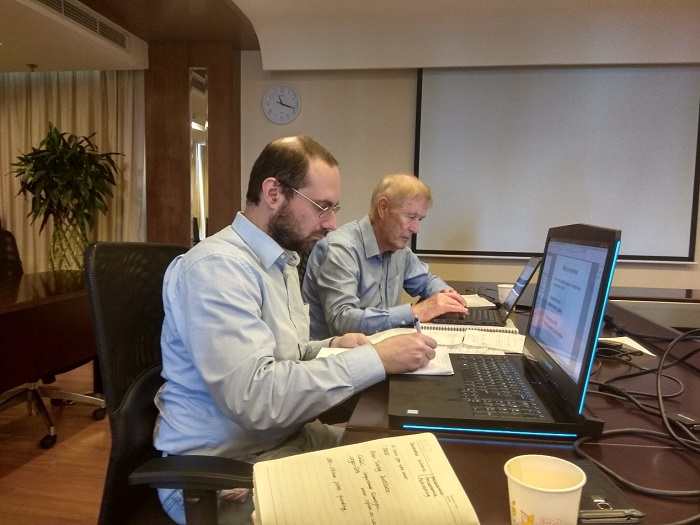
On July 2018, at the SSRF, Prof. Alessandro Sepe and Prof. Sir Tony Hey, Chief Data Scientist at the UK Science and Technology Facilities Council (STFC), UK Research and Innovation (UKRI), worked on a memorandum of cooperation. | Prof. Sepe's main research direction is synchrotron Big Data science, and he has joined the SSRF full-time as the chief scientist of the BDSC since March 2018, where he led his team carrying out a series of innovative research and development works culminating in the architecting, design and deployment of the BDSC at the SSRF, while making a number of core technological breakthroughs in the design and development of scientific computing infrastructures, and in the research and development of automatic data processing pipelines. This architecture provides a unified Big Data management and processing framework for the SSRF, supporting multiple running beamlines, while capable of supporting the new additional beamlines part of the SSRF Upgrade Project. |
In 2020, in the early stage of the new coronavirus (COVID-19) epidemic, the BDSC fully guaranteed the emergency opening of the Crystallography beamline at the SSRF, supporting the domestic users in obtaining, for the first time, the structural properties of a number of key proteins of the new coronavirus, fully supporting, at the most difficult moment, the principle of "fighting the epidemic and resuming work and production", while strongly supporting drug screening and research and development, as well as vaccine research and development and other related research projects. Moreover, subsequent research carried out on the new coronavirus at the Crystallography beamline at the SSRF has largely benefited from the support of the BDSC. |
On October 2018, at the ShanghaiTech University, the first national symposium on Big scientific Data at Large Scientific Facilities was held with the participation of the SSRF Shanghai Advanced Research Institute, CAS, ShanghaiTech University, , Institute of High Energy Physics, CAS, and the China Spallation Neutron Source. |
On November 2019, the international conference “Artificial Intelligence Applied to Photon and Neutron Science” hosted by the European Synchrotron Radiation Facility (ESRF) at Grenoble, France was held. Prof. Sepe was invited to give a lecture on the BDSC at the SSRF, as The First Superfacility Platform in China. | Furthermore, Prof. Sepe has actively used his overseas research network to promote SSRF's foreign exchanges and cooperation. He has participated in many top international academic conferences in the field of scientific Artificial Intelligence (AI) applied to large scientific installations, where he gave invited reports, which improved the international visibility of the SSRF. Prof. Sepe’s outstanding work has been reported by Italian TV academic channels and newspapers, which aroused great interest in the international community to build Shanghai into a science and technology innovation center with global influence. Moreover, Prof. Sepe has actively led and promoted strong and robust domestic cooperation, sharing his achievements on synchrotron Big Data science with the other domestic light source large scientific facilities in China. Furthermore, as an international expert, Prof. Sepe guides and trains a number of graduate students of the ShanghaiTech University, while cultivating young scholars. |
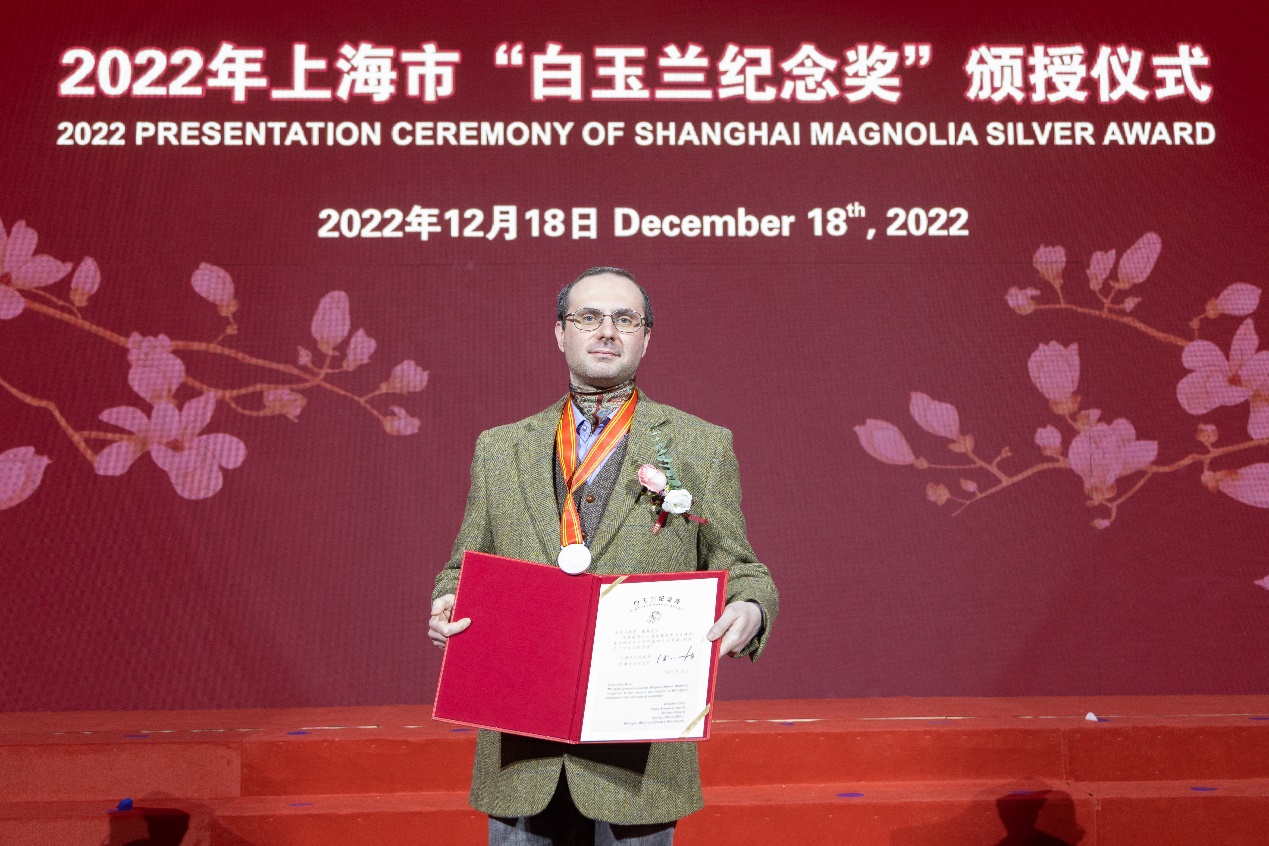
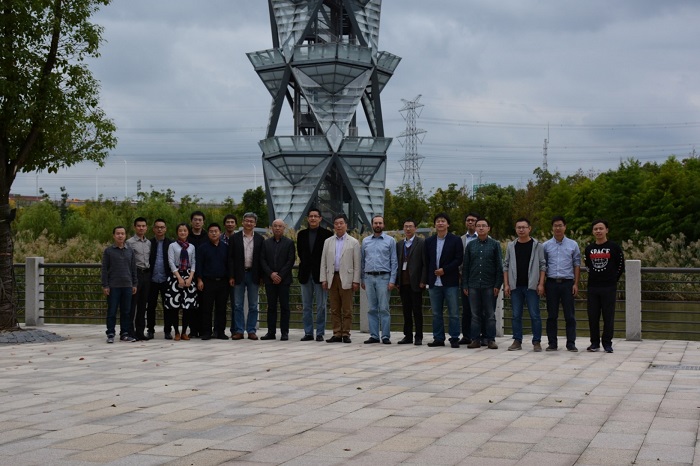

Established by the Shanghai Municipal Government in 1989 and named after the city flower of Shanghai, the magnolia, the Magnolia Silver Award is awarded annually to thank outstanding expatriates in recognition of their positive contributions to Shanghai's foreign exchanges and urban development. This year, 50 outstanding expatriates from 13 countries, including the United States, Germany, France, Italy, Australia and Japan, received the award.
09 07, 2022
The Big Data Science Center at the Shanghai Synchrotron Radiation Facility: The Dawn of the Scientific Superfacilities
The massive amount of raw data produced nowadays at large scientific facilities creates not only enormous new opportunities but also tremendous challenges. Already, only a small fraction of this multidisciplinary and scientifically complex Big Data are fully analysed and, ultimately, used in
Users at the Shanghai Synchrotron Radiation Facility (SSRF) can seamlessly access the scientific and technological architecture of the Big Data Science Center (BDSC) through thin terminals to take full advantage of all the services offered by the BDSC in real time while running their experiments at the SSRF beamlines. | The massive amount of raw data produced nowadays at large scientific facilities creates not only enormous new opportunities but also tremendous challenges. Already, only a small fraction of this multidisciplinary and scientifically complex Big Data are fully analysed and, ultimately, used in scientific publications, and it is predicted that in a few years, conventional data-analysis approaches will be overwhelmed, preventing the users from producing meaningful science from their large-scale experiments. This is a problem for all synchrotron and neutron facilities, as well as for X-ray free-electron laser facilities, where tens of petabytes are produced annually. Beamtime is expensive and the lack of automated data-analysis pipelines reduces beamtime efficiency. This “data deluge” effect [1] has implications for all large scientific facilities worldwide in that it affects fast data collection and storage and curation of the data, including data movement and deposition in a database. |
We are witnessing the dawn of artificial intelligence (AI), machine learning (ML) and robotic automation within the field of large scientific facilities, generating profound changes in how petabytes of interdisciplinary datasets are intelligently processed, managed, analysed and visualised. The consequent evolution of large scientific facilities into superfacilities enables multimodal user science to confront the Big Data challenges, fundamental for the entire scientific community. The Big Data Science Center (BDSC) at the Shanghai Synchrotron Radiation Facility (SSRF), Shanghai Advanced Research Institute (SARI), Chinese Academy of Sciences, Zhangjiang Laboratory, is the first scientific superfacility in China, and one of the first worldwide [2]. With its state-of-the-art developments it aims to dramatically accelerate and automate the multidisciplinary research of all the users at large national scientific facilities, thus effectively increasing the rate of their scientific discoveries and the resulting technological advancements, with a clear societal impact. Therefore, the BDSC Big Data Science platform targets the research projects that several national and international universities, academies, research institutes and industries are pursuing at SSRF, where massive support in terms of scientific computation is required to enable the most complete knowledge transfer from scientific research to industrial developments, while elastically interfacing them with the top Chinese National Supercomputer Centers. | Video documentary showing the BDSC activities, international potential and impact on the user’s science at the SSRF, and more in general on the large national scientific facilities worldwide. Here, the BDSC state-of-the-art superfacility capabilities are demonstrated using the Biological Macromolecular Crystallography Beamline (MX Beamline) as a case study, including users performing a real experiment in real time. The entire BDSC workflow is shown, from the preparation of the user experiment at the beamline, through the setting-up of the beamline, to the real-time Big Data analysis and results visualisation, including the user’s data being processed and monitored through the BDSC superclusters and Control Room, as well as the users interacting with the BDSC Platform. |
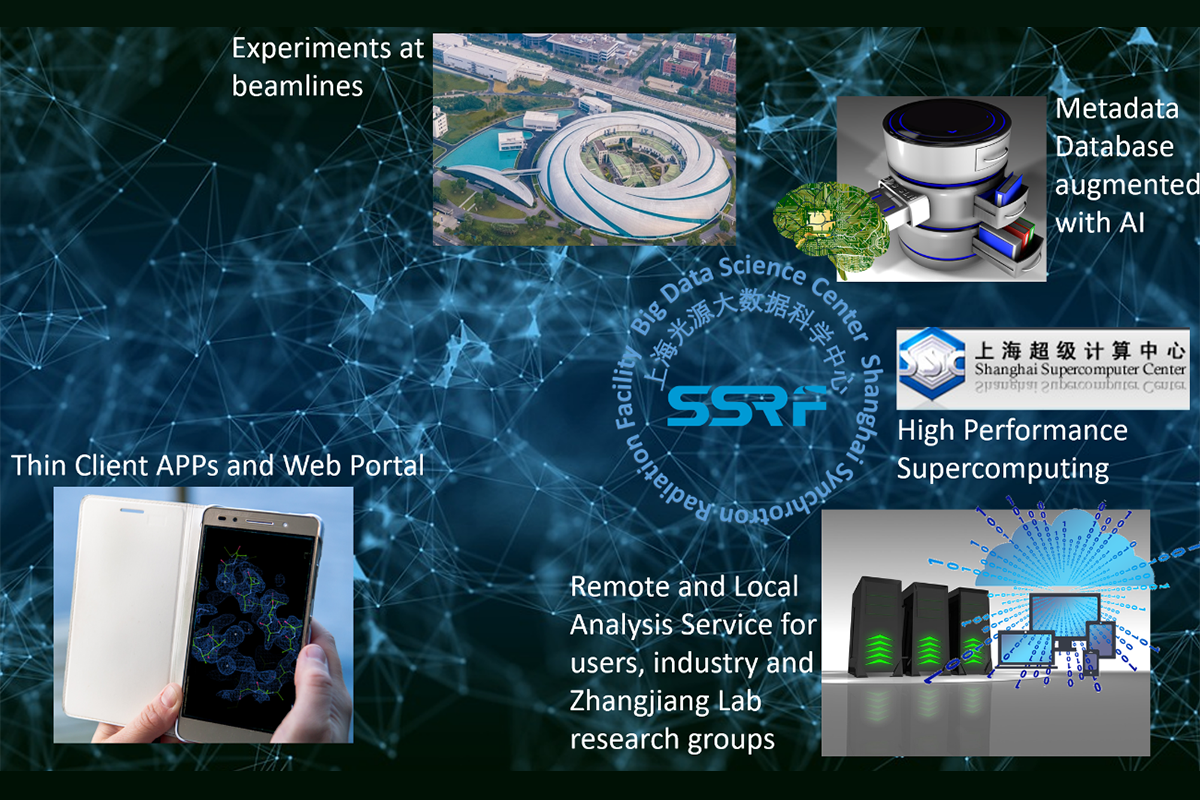
The BDSC is one of the latest SSRF upgrades resulting from the SSRF Phase II project. The BDSC aims to support all the SSRF beamlines, as well as their national and international users, through its state-of-the-art scientific computational infrastructure, including high-performance computing (HPC), latest-generation storage systems and advanced software platforms. Users and beamlines at the SSRF are thus benefiting, seamlessly, from the most advanced Big Data processing, movement, analysis, results interpretation and visualisation capabilities offered by the BDSC. The BDSC aims, in fact, to support all the SSRF users to produce high-impact science and technology, matching the highest international quality standards, thus further enabling the users to publish their results in top-notch internationally renowned peer-reviewed journals.
Professor Alessandro Sepe, Director of the BDSC, has designed and architected this novel Big Data Science platform at SSRF, which allows all its users to fully exploit the scientific and technological potential of the BDSC for their research. The entire BDSC staff supported Professor Sepe’s efforts in developing, deploying and then constantly upgrading the BDSC infrastructure, which is now fully operational. Here, state-of-the-art Big Data science and technologies, AI, internet of things (IoT), real-time unstaffed and remotely controlled experiments, robotic automation, HPC, cloud/fog supercomputing and massive parallelisation are converging on the SSRF through the BDSC’s fully centralised platform, accelerating the user multidisciplinary science performed at SSRF by an outstanding factor of 60, and effectively creating the first-ever world-class user-friendly Chinese superfacility. This is greatly augmenting the interpretation of all the scientific data generated by all the experiments at SSRF. By developing, deploying and upgrading the Big Data Science platform, the BDSC is fostering full robotic automation at the SSRF beamlines, aiming at real-time unstaffed and remotely controlled experiments, while sharing its successful experience with all the other multidisciplinary large facilities worldwide.
The Big Data Science platform developed by the BDSC is, in fact, collecting, tagging and tracking large volumes of metadata from all the experiments at SSRF to fully automate the entire large-facility lifecycle. Hundreds of petabytes of scientific data are thus tagged, to be then ingested by neural networks for ML. This remarkable scientific and technological achievement also allows non-expert users at SSRF to obtain scientifically meaningful results in real time, instead of spending months, after returning to their home institutions, processing unstructured raw data. The BDSC is thus effectively extending the use of large national facilities to the largest number of scientific and industrial disciplines ever, dramatically increasing the scientific and technological productivity of large scientific facilities like SSRF, shifting the focus of their users from data science to pure science, thus enabling a true user-science-centric and multimodal infrastructure.
The BDSC is also engaged in further expanding the SSRF scientific computational capabilities, directly interfacing, through the BDSC framework, the SSRF with the supercomputers in China, including the Shanghai Supercomputer Center (SSC), with extremely low-latency networks.
The BDSC further aims at seeding the Chinese National Scientific Grid based on the platform model being developed at the BDSC.
References:
[1] Synchrotron Big Data Science. Small, 14, 1802291.
[2] Deploying the Big Data Science Center at the Shanghai Synchrotron Radiation Facility: the first superfacility platform in China. Mach. Learn.: Sci. Technol. 2, 035003.
[3] The Big Data Science Center at the Shanghai Synchrotron Radiation Facility: the dawn of the scientific superfacilities. International Union of Cristallography 30, 2.
12 18, 2019
Prof. Alessandro Sepe awarded I-LAMP Medal and Prize
Prof. Alessandro Sepe has been honoured with the I-LAMP International Medal and Prize in recognition of his international interdisciplinary contribution and academic career dedicated to the development of the Big Data Science applied to the multidisciplinary science at the large scientific facilities
Prof. Alessandro Sepe has been honoured with the I-LAMP International Medal and Prize in recognition of his international interdisciplinary contribution and academic career dedicated to the development of the Big Data Science applied to the multidisciplinary science at the large scientific facilities.


